
Rooftop tents (RTTs) have completely transformed the way we experience car camping. By moving your sleeping quarters off the ground and onto the roof of your vehicle, you instantly gain better views, faster setup times, and freedom from damp, uneven terrain. However, with so many options hitting the market, choosing a rooftop tent that actually fits your specific vehicle and budget can quickly become overwhelming. In this guide, we break down everything you need to know—from weight limits to shell types—to help you buy the perfect setup.
(Just keep in mind that rules vary depending on where you park, so make sure to check out my full guide on UK Wild Camping Laws to stay on the right side of the law).
Choosing a Rooftop Tent: Hard Shell vs. Soft Shell
The biggest decision you’ll make is choosing between the two primary styles of rooftop tents. Both have clear pros and cons depending on how you travel.
(If you are still weighing up whether to make the jump to the roof at all, you might want to read my full breakdown on Rooftop Tents vs. Ground Tents first to see how they compare on cost and comfort.)
Hard Shell Tents

Hard shell tents are housed in a rigid plastic, fiberglass, or aluminum case. When released, they pop up vertically or open like a clamshell using gas struts.
- Pros: Unmatched setup speed (often under 60 seconds), better aerodynamic fuel efficiency when closed, and excellent durability against low-hanging branches.
- Cons: Generally more expensive and heavier, with a fixed footprint that usually only sleeps 2 people.
Soft Shell Tents
Soft shell tents look more like traditional camping tents but fold out over the side of your vehicle, supported by an internal frame and a folding ladder.
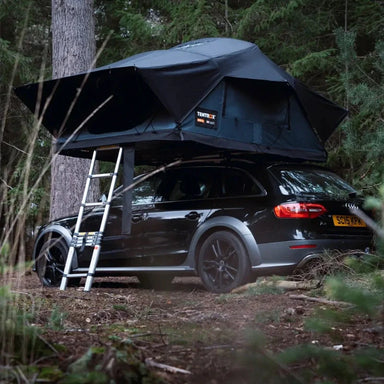
- Pros: More budget-friendly, a smaller footprint when closed on your roof, and a larger open sleeping area that can often accommodate 3 to 4 people.
- Cons: Take longer to set up and pack away (usually 5 to 10 minutes), require a heavy-duty travel cover, and create more wind drag on the motorway.
Knowing Your Vehicle’s Weight Limits (Crucial Step)
Knowing this information is key before buying any rooftop tent, as you will have issues if these weight limits are not considered when making your purchase.
The weight limits are split into two different limits: dynamic and static.
- Dynamic Weight Limit: This is the maximum weight allowed on the roof when the car is driving down a motorway.
- Static Weight Limit: This is the weight the roof can hold when your car is stationary at a camp with you and all your gear inside the tent.
The static limit is always much higher because the car isn’t dealing with braking, cornering, or wind resistance, which is why the roof can safely support you and the tent once you’re parked up.
Before you buy, make sure to read my breakdown on understanding roof weight limits so you know your car can handle the setup safely.
💡 Note: Don’t forget to factor in the weight of your roof bars or roof racks themselves when you’re calculating your dynamic load capacity!
Essential Features to Look for in 2026
When you are comparing different models, there are a few high-value features you should look out for that make a massive difference to how comfortable you’ll be at camp.
- Built-in Mattresses: This all comes down to pure convenience. Having a mattress already inside the tent means you don’t have to roll out, inflate, or pack anything extra away when you are ready to move camp. Look for high-density foam here—cheap foam will just bottom out under your hips, leaving you sleeping on a hard base, whereas high-density foam actually supports your weight properly.
- Anti-Condensation Mats: This is an absolute must-have upgrade, especially for camping in the UK. When your body heat warms up the tent but the car roof underneath is freezing cold, moisture collects under the mattress. An anti-condensation mat is a breathable mesh layer that sits under the bed, creating an air gap so everything dries out instead of going mouldy.
- Storage and Organisation: This is all about ease of use. Having proper internal pockets means you aren’t taking heavy boxes up to the tent just to store your items and keep track of your gear.
- Integrated LED Lighting: Built-in lights are way better than fumbling around in the dark. It is one less thing to worry about packing, and because they are integrated, they are actually made to light the exact space they were built for.
- Skyview Windows: If the tent has clear panels in the roof fabric, it lets in great natural light during the day and allows you to stargaze from bed at night.
Final Verdict: Choosing a Rooftop Tent
At the end of the day, the choice comes down to your budget and how you plan to camp.
If you have the budget and you travel frequently, moving the car from campsite to campsite instead of just parking up at one place for a couple of days, then choose the hard shell for its rapid pitch and pack solutions.
On the other hand, if you are a family or are more budget-conscious and want to maximize the living space with the folding design, choose a soft top.
💰 Money-Saving Tip: If you do decide to go down the hard shell or soft shell route and want to grab a TentBox setup, you can use my personal TentBox referral link here to score an instant £100 off your tent at checkout. It saves you a decent chunk of cash right away, and helps me get a bit of gear for my own setup too!